Loading...
New
See what manual alert triage really costs your security team.
New
See what manual alert triage really costs your security team.

See what manual alert triage really costs your security team.
See what manual alert triage really costs your security team.
Loading...
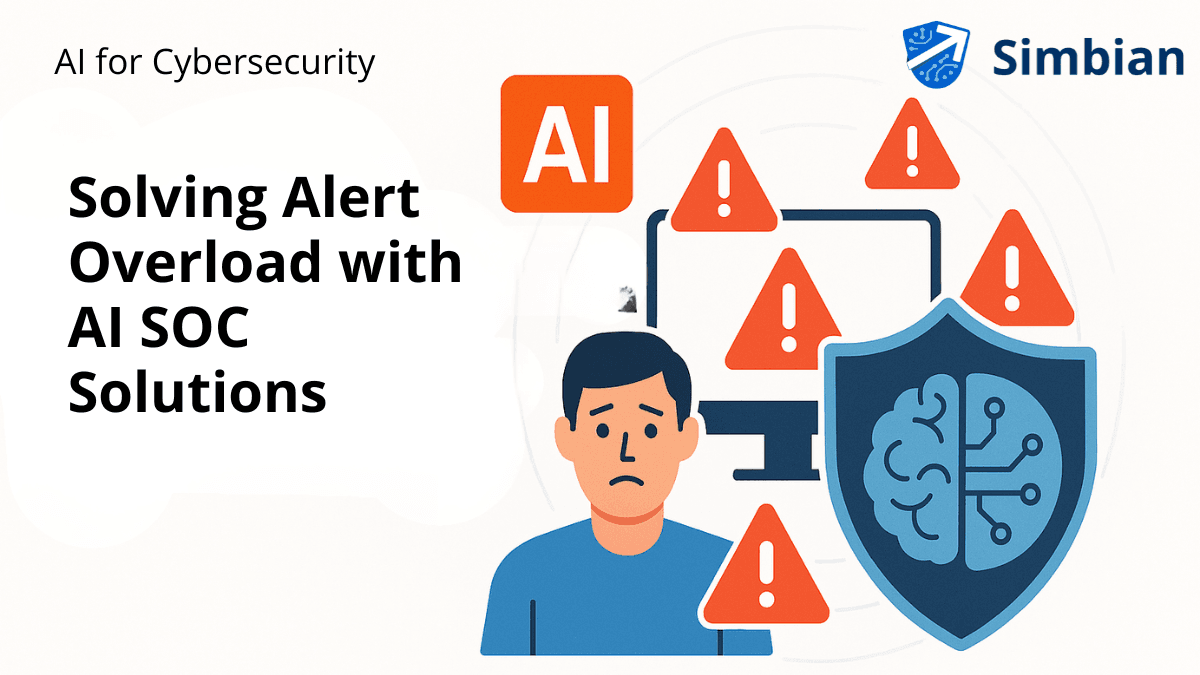
The cybersecurity landscape is experiencing a critical inflection point where traditional Security Operations Centers (SOCs) are overwhelmed by an unprecedented volume of security alerts. With enterprise environments generating over 10,000+ daily alerts and 66% of SOC teams unable to keep pace, organizations are turning to artificial intelligence to revolutionize their security operations and combat the growing crisis of alert fatigue.
Alert fatigue represents a state where cybersecurity analysts become cognitively overloaded by the sheer volume of security notifications, leading to diminished effectiveness in detecting and responding to genuine threats. This phenomenon has reached epidemic proportions, with alarming statistics revealing the scope of the problem:
90% of SOCs are overwhelmed by backlogs and false positives
71% of SOC analysts experience burnout, with 64% considering leaving within a year
70% of junior analysts leave within three years of starting their roles
More than 80% of analysts report feeling constantly behind in their work
The operational impact extends far beyond individual burnout, creating systemic vulnerabilities that attackers actively exploit. Can AI SOC Analyst replace humans and reduce overload?
Alert fatigue carries significant financial and operational consequences that organizations often underestimate. When analysts become desensitized to the constant stream of notifications, more than a quarter of alerts get ignored weekly, creating dangerous security gaps and increasing breach costs.
The cascading effects include:
Increased dwell time for attackers, with breaches taking an average of 277 days to identify and contain
Missed critical threats buried under false positives
Slower response times due to cognitive overload
Higher analyst turnover and recruitment costs
Diminished trust in security systems leads to poor decision-making
Organizations experiencing severe alert fatigue report that genuine threats can slip through unnoticed for extended periods, allowing attackers to establish persistence and cause extensive damage before detection.
Artificial intelligence is fundamentally transforming cybersecurity defense by providing capabilities that far exceed human limitations. AI-driven systems can analyze vast amounts of data in real-time, identifying anomalies and potential breaches before they escalate.
These AI systems leverage machine learning algorithms to continuously adapt to evolving threat patterns, reducing the need for frequent manual updates and human intervention.
The emergence of AI SOC analysts represents a paradigmatic shift from traditional security operations. AI-powered SOC platforms automate threat triage and investigation by categorizing alerts, prioritizing high-risk threats, and enriching incident data with relevant context.
Key capabilities of AI SOC analysts include:
Automated alert correlation across multiple security tools
Behavioral anomaly detection using machine learning
Dynamic investigation planning without static playbooks
Real-time threat intelligence integration
Continuous learning from the organizational context and feedback
Organizations implementing AI SOC solutions report a 90% reduction in Mean Time to Conclusion (MTTC), from 30-40 minutes to just 3-11 minutes. This dramatic improvement enables security teams to handle 10X more alerts while maintaining 100% investigation coverage.
An AI SOC leverages artificial intelligence, machine learning, and automation to enhance threat detection, response, and mitigation. Unlike traditional SOCs that rely heavily on manual processes, AI-driven security operations centers integrate multiple layers of intelligent automation:
Data Collection and Analysis: Modern AI SOCs automate data collection from diverse security tools, normalizing and correlating information across previously siloed systems. This unified approach eliminates the gaps that attackers often exploit in fragmented security architectures.
Intelligent Alert Triage: AI algorithms automatically categorize and prioritize alerts based on risk scores, threat intelligence, and organizational context. This intelligent triage ensures that critical threats receive immediate attention while reducing noise from false positives.
Autonomous Investigation: Advanced AI SOC platforms can autonomously plan and execute investigation workflows, dynamically adapting to each alert's unique characteristics. This capability eliminates the dependency on static playbooks that often fail against novel attack vectors.
Organizations deploying AI SOC solutions experience transformative improvements across multiple operational metrics:
Enhanced Detection Capabilities: AI systems excel at identifying sophisticated threats that evade traditional signature-based detection. By analyzing behavioral patterns and correlating seemingly unrelated events, AI can detect advanced persistent threats (APTs) and zero-day exploits.
Reduced False Positives: Machine learning algorithms continuously refine detection rules based on organizational data and feedback, significantly reducing false positive rates. AI-powered systems can reduce false positive security alerts by up to 43%, allowing analysts to focus on genuine threats.
Improved Response Times: Automated investigation and response capabilities enable organizations to respond to threats at machine speed. AI can accelerate incident response times by 56%, dramatically reducing the window of opportunity for attackers.
Scalable Operations: AI SOC solutions provide inherent scalability, adjusting seamlessly to evolving organizational requirements and the changing threat landscape. This adaptability ensures that security operations can grow with the business without proportional increases in staffing.
One of the most significant advantages of AI in combating alert fatigue is its ability to correlate and prioritize security events intelligently. Traditional SOCs often struggle with alert volumes reaching 10,000+ per day, making it impossible for human analysts to investigate every notification thoroughly.
AI-powered correlation engines address this challenge by:
Grouping related alerts to provide a comprehensive incident context
Applying risk-based scoring to prioritize investigation efforts
Eliminating redundant notifications from multiple detection systems
Providing contextual enrichment to accelerate decision-making
AI SOC analysts can autonomously execute complex investigation workflows that traditionally required significant manual effort. These systems combine expert knowledge with organizational playbooks to enhance response times and coverage.
Automatically investigate all alerts as they're generated across 70+ security tools
Determine alert validity and severity through intelligent analysis
Recommend response actions based on threat intelligence and organizational context
Execute automated remediation when risk scores indicate immediate threats
Unlike static rule-based systems, AI SOC Agents continuously learn and adapt to organizational environments. This capability ensures that detection accuracy improves over time while false positive rates decrease.
The learning process incorporates:
Historical incident data to identify attack patterns
Analyst feedback to refine decision-making algorithms
Threat intelligence updates to stay current with emerging threats
Organizational context to customize responses to business requirements
The transformation of cybersecurity through artificial intelligence represents both an unprecedented opportunity and an urgent necessity.
AI SOC Agents offer a path forward that not only addresses the immediate crisis of alert overload but also provides strategic advantages for long-term security resilience. By automating routine tasks, improving threat detection accuracy, and enabling rapid response capabilities, AI allows security teams to focus on high-value strategic initiatives while maintaining comprehensive protection.
The future of cybersecurity lies in the intelligent integration of human expertise with AI capabilities, creating security operations that are more effective, efficient, and resilient than either could achieve alone. Organizations that embrace this transformation today will be better positioned to defend against the evolving threat landscape of tomorrow.
Simbian offers comprehensive AI SOC agent solutions that integrate seamlessly with existing security infrastructure while providing autonomous investigation and response capabilities.