Loading...
New
See what manual alert triage really costs your security team.
New
See what manual alert triage really costs your security team.

See what manual alert triage really costs your security team.
See what manual alert triage really costs your security team.
Loading...
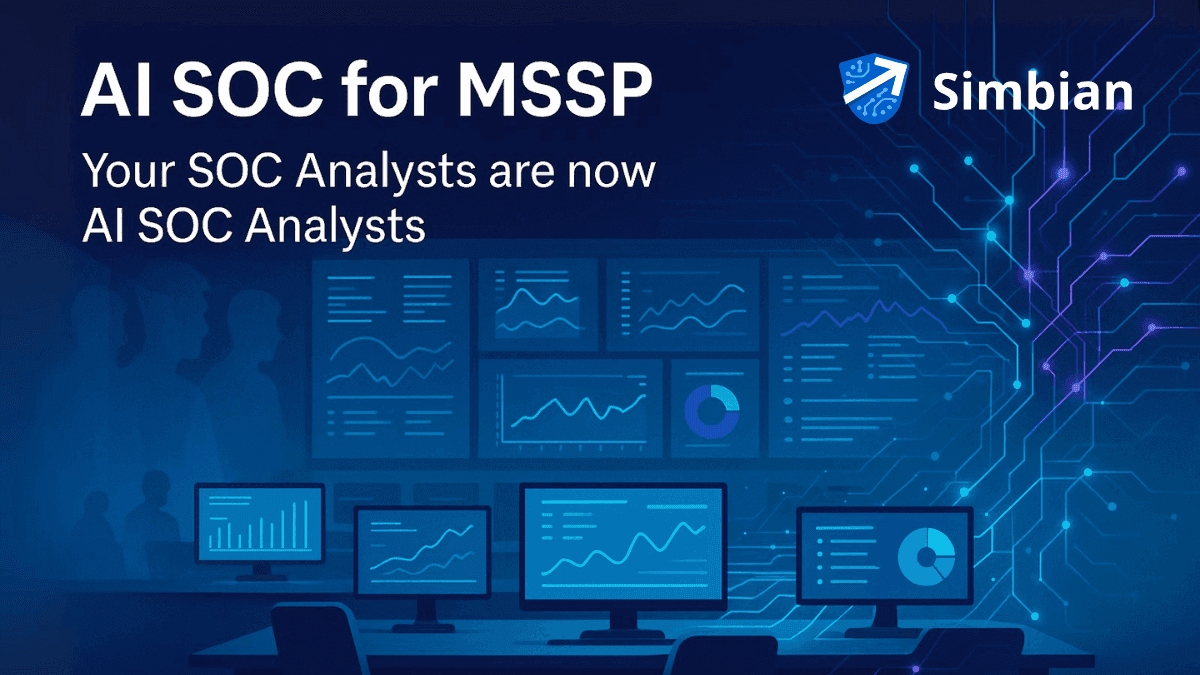
AI-driven cyberattacks are overwhelming even elite security teams. As organizations face a severe shortage of talent, they are turning to managed security service providers for help. This shift presents a significant opportunity for MSSPs, but it also demands that you consistently prove you offer a more effective defence to win and keep their business.
A typical analyst in the SOC team spends about 25% of their time chasing false positives—sifting through erroneous security alerts or false indicators of confidence—before they can tackle real findings. That means that every hour an analyst spends on the job, they're wasting 15 minutes on false positives.
This signals a critical problem of alert overload, along with ever-rising false positives. SOC teams face an insurmountable number of alerts, and if most of them are false positives, the real alerts tend to slip by, wreaking havoc. Primarily for security providers, this catastrophic problem grows tenfold with every customer and rising account. At one point, what does growth come at the cost of?
... and many more.
The search for a new SOC analyst is a marathon, not a sprint. On average, it takes seven months to fill a vacant seat, and for 15% of leaders, that timeline extends to a gruelling two years or more. All the while, the clock is ticking, and gaps in your defense widen. Once you finally find the right person, months of training and onboarding follow before they are fully operational.
Some leaders are experiencing personnel reductions of up to 40%. Importantly, nearly half of the leaders have noticed that interns are staying in their positions for shorter durations. This isn't merely a staffing issue; it reflects a banal level of burnout.
A report found that there are only enough workers to fill 83% of available jobs. 71% of SOC Analysts rate their pain of being a SOC analyst at 6 through 9 out of 10. This confirms that most SOC managers and company leaders need to make significant adjustments in how they operate and manage their people to make SOC work less painful.
In the evolving landscape of AI for cybersecurity, Simbian's AI SOC champions a human-in-the-loop architecture that empowers analysts rather than replacing them. This design ensures analyst oversight and policy governance frameworks guide every operation, maintaining human control while leveraging autonomous SOC agents for efficiency. No more unchecked automation, our system enforces strict guardrails, allowing security teams to define rules and intervene seamlessly.
AI SOC agents handle routine alert triage automation, processing high-volume alerts in under four minutes from detection to response, dramatically reducing MTTR from hours to minutes. This frees human experts to focus on complex decisions, such as strategic threat hunting with AI and nuanced incident response. Integrated with SIEM/XDR tools via 70+ integrations, our Context Lake™ knowledge provides rich, business-specific context for accurate escalations.
The magic lies in continuous learning from analyst feedback and corrections. Every interaction refines the AI SOC Agent, improving false positives reduction and adapting to emerging threats. For MSSP/MDR enablement, this means 24/7 coverage with a < 24h time-to-value and ~3-month payback through operational savings: no more analyst burnout—experience autonomous SOC augmentation that scales services without compromising control.
AI SOC transforms MSSP operations by automating routine security tasks, bringing detection-to-response under four minutes, and delivering measurable ROI through enhanced threat response capabilities.
5 Key Benefits for MSSPs Using AI SOC
Our comprehensive LLM performance benchmarking reveals Simbian's AI SOC consistently outperforms competitors on SOC-specific tasks, including threat classification, incident correlation, and contextual analysis. Through rigorous testing across diverse security environments, the AI SOC Agent demonstrates exceptional accuracy in distinguishing genuine threats from benign activities using our proprietary Context Lake knowledge graph.
Our benchmark is based on the autonomous investigation of 100 full-kill chain scenarios that realistically mirror the challenges faced by human SOC analysts every day. The created attack scenarios have known ground truth of malicious activity, allowing AI agents to investigate and be assessed against a clear baseline. The used scenarios are even based on the historical behavior of well-known APT groups and cybercriminal organizations, covering a wide range of MITRE ATT&CK™ Tactics and Techniques, with a focus on prevalent threats such as ransomware and phishing.
It's time to master and become smarter with AI. Be a more effective guardian of your clients and build the future of managed security services.
Let Simbian.ai show you how.