Loading...
New
See what manual alert triage really costs your security team.
New
See what manual alert triage really costs your security team.

See what manual alert triage really costs your security team.
See what manual alert triage really costs your security team.
Loading...
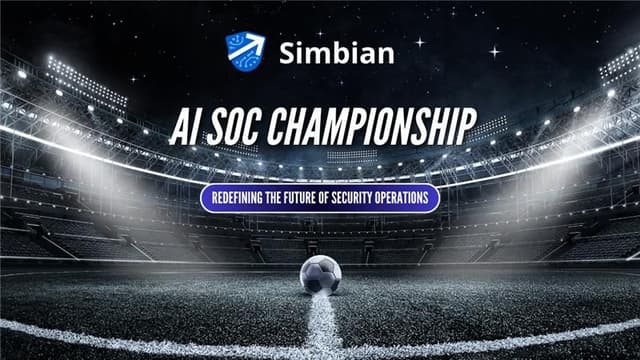
In April 2025, over 100 cybersecurity professionals participated in a groundbreaking event that may fundamentally reshape how enterprises defend their digital domains. Simbian's inaugural AI SOC Championship, a 24-hour high-stakes competition, offered unprecedented insights into how artificial intelligence transforms security operations centers (SOCs) across industries.
We can tell you this wasn't merely a test of technical prowess—it was a watershed moment for cybersecurity teams grappling with alert fatigue, resource constraints, and increasingly sophisticated threats.
Traditional SOC analysts face a nearly impossible task in today's threat landscape. To manage the sheer volume of security alerts generating and processing false positives taxes cognitive resources and reduces the ability to respond effectively. This systemic issue has resulted in recorded incidents of missed critical alerts, elevated burnout rates, and gaps in vulnerabilities that savvy attackers can exploit.
Security operations centers are transforming from manual operations to AI-powered systems that utilize machine learning, generative AI, and hyper-automation to improve threat detection, response, and remediation. This transition seeks to alleviate the pressure on human analysts by automating frequent and tedious operations.
The modern AI SOC offers several critical advantages:
The championship's structure was as innovative as it was demanding. Over 100 professional cybersecurity analysts engaged with Simbian's AI SOC Agents to investigate hundreds of security alerts—90% false positives and 10% meticulously crafted true-positive scenarios covering the complete kill chain.
Throughout the 24-hour competition, participants navigated a complex landscape of simulated ransomware attacks and data exfiltration attempts. The AI agents were deliberately limited to basic triage functions, while human participants guided them through a token-budgeted toolkit of chat interfaces, co-pilot functionality, and advanced reasoning modules.
What distinguished this competition wasn't merely threat identification but the collaboration between human discernment and artificial intelligence. The AI handled repetitive query work while analysts focused on understanding attacker behavior and business impact.
It revealed what our AI SOC agents are capable of. The baseline AI SOC Agent scored 59 out of 100, whereas the top human team scored 86. In "extra effort" mode, with skills unlocked, the AI scored 72 — better than most human participants.
The top performers were:
Despite the AI's strong showing, the clear takeaway wasn't that machines should replace humans—but rather that the future belongs to teams who strategically combine human intuition with AI's tireless precision.
The championship revealed how AI SOC agents are reshaping security operations and investigations:
This change reflects broader trends in the industry, where there is a greater need for analysts with threat interpretation and risk management skills due to AI SOC automation.
As one participant noted: "The AI handled the technical forensics, which let me concentrate on what matters—protecting critical assets and guiding business leadership."
The technical foundations of an AI-powered SOC that enabled these performance gains include:
The championship participants offered valuable perspectives on how AI is reshaping security operations:
Perhaps the most valuable insights came from an unplanned stress test of Simbian's infrastructure. As all participants simultaneously launched investigations, the systems faced a surge comparable to a ransomware gang unleashing tens of thousands of encrypted files per second.
Six and a half hours into the championship:
This unplanned stress test revealed critical constraints in cloud infrastructure that traditional failover protocols couldn't address. However, the engineering team's response led to significant improvements:
The 2025 AI SOC Championship showed that efficient SOCs will increasingly rely on AI-driven processes that augment and twofold human capabilities rather than replace them. As threats evolve in sophistication and volume, integrating AI into SOC teams will become essential for maintaining effective security postures.
Significant developments and shifts include:
Simbian's AI SOC Championship offered a compelling glimpse into the future of cybersecurity operations. By combining human expertise and AI capabilities, security teams can dramatically improve their effectiveness against an increasingly challenging threat landscape.
The competition validated that AI SOC agents can slash time-to-resolution by a factor of three while allowing security experts to focus on what they do best: high-level strategy, reasoning, and creativity. This human-AI partnership represents the next evolution in security operations—combining the best of both worlds to create more resilient, responsive, and effective defense capabilities.
As we move forward, organizations that embrace this collaborative approach to security operations will be best positioned to defend against tomorrow's threats while maximizing the value of their human security talent.