Loading...

Loading...
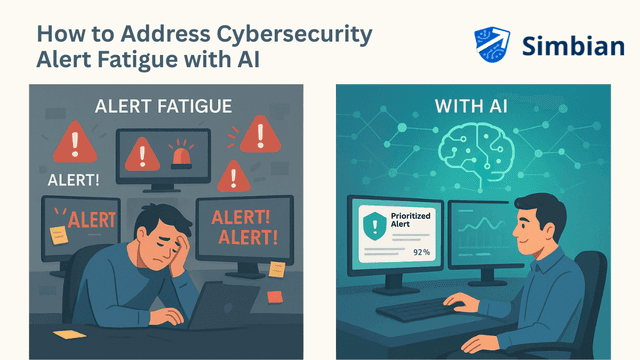
Alert fatigue has become the silent epidemic plaguing cybersecurity operations. When 70% of SOC analysts experience severe stress and 64% consider leaving their roles within a year, we're not just facing a staffing shortage—we're confronting a fundamental breakdown in how security operations function. But there's a transformative solution emerging: AI SOC that doesn't replace human expertise but amplifies it.
The statistics paint a sobering picture of modern SOC operations. Security teams process thousands of alerts daily, with up to 50% being false positives. This overwhelming volume creates a dangerous cycle where analysts become desensitized to threats, accuracy plummets by 40% after just 12 hours of constant alerting, and critical threats hide in plain sight among the noise.
The human cost is equally devastating. Research reveals that 83% of SOCs experience annual staff attrition, with 35% of departing analysts citing burnout as the primary cause. When you factor in the estimated £50,000–£100,000 cost to replace a single security professional, alert fatigue becomes not just an operational challenge but a significant financial burden.
Many organizations have attempted to solve alert fatigue through traditional automation and SOAR platforms, but these solutions often create new problems. Rule-based automation breaks when faced with novel scenarios, requires constant maintenance, and lacks the contextual understanding necessary for nuanced security decisions. Static playbooks can't adapt to the dynamic nature of modern threats, leaving analysts with yet another tool to manage rather than a solution that truly helps.
The fundamental issue isn't the lack of automation—it's the absence of intelligent automation that can think, reason, and adapt like experienced analysts while handling the volume that overwhelms human capacity.
AI SOC agents are autonomous AI Agents for cybersecurity that represent a quantum leap beyond traditional automation. Unlike rigid rule-based tools, these agents leverage advanced language models, reasoning engines, and contextual understanding to perform complex triage, investigation, and response tasks.
AI SOC agent excels at the repetitive, time-consuming tasks that consume analyst bandwidth. They can process thousands of alerts simultaneously, gathering context from multiple sources, correlating related events, and presenting comprehensive findings in minutes rather than hours. This parallel processing capability means every alert receives thorough investigation, not just the ones human analysts have time to review.
Intelligent Pattern Recognition : These systems identify subtle patterns and correlations that might escape human detection, especially when analysts are overwhelmed. An AI agent might recognize that a seemingly benign login attempt becomes significant when correlated with unusual network traffic patterns, previous failed authentications, and the user's typical behavior profile.
Continuous Learning and Adaptation : Unlike static automation, AI SOC agents learn from organizational feedback, historical decisions, and evolving threat landscapes. They build institutional knowledge that persists despite staff turnover, ensuring consistent, high-quality analysis regardless of who's on shift.
The most critical aspect of effective AI SOC implementation is maintaining human oversight and decision-making authority. AI agents handle the data gathering, initial analysis, and routine tasks, but analysts retain control over strategic decisions, complex investigations, and response actions.
This human-AI collaboration creates a force multiplier effect. Analysts can focus on high-value activities like threat hunting, detection engineering, and strategic security planning while AI handles the volume-intensive triage work. Studies show that organizations embracing this hybrid model see 40% reduction in breach costs while significantly improving analyst job satisfaction.
Enhanced Decision-Making : When AI agents present pre-analyzed alerts with comprehensive context, enriched intelligence, and clear recommendations, analysts can make faster, more informed decisions. Instead of spending 20-40 minutes gathering basic information about each alert, analysts receive actionable intelligence that enables immediate, confident responses.
Reduced Cognitive Load : By eliminating the mental fatigue associated with constant alert processing, AI agents help analysts maintain peak performance throughout their shifts. This reduction in cognitive load translates to better threat detection, fewer errors, and improved overall security posture.
Successful AI SOC implementation requires a strategic approach that builds confidence while demonstrating value. Organizations should begin by identifying specific pain points—perhaps a particular alert type with high false positive rates or investigations that follow predictable patterns.
Gradual Integration**:** Start with autonomous triage for lower-risk alerts, allowing the AI to demonstrate its capabilities while maintaining human oversight for critical decisions. As confidence builds, gradually increase the AI SOC's scope to more complex scenarios.
Continuous Tuning: AI SOC agents improve through feedback and organizational learning. Regular review of AI decisions, combined with analyst input, helps the system adapt to organizational priorities and reduce false positives over time.
Success Measurement: like Mean Time to Response remain important, AI-powered SOCs enable new success indicators. Organizations report every alert investigated and responded to in under four minutes from detection on average, 95% of those responses approved by their own analysts, and 5x cost savings through improved efficiency.
More importantly, teams report renewed job satisfaction as analysts return to strategic, investigative work rather than alert processing. This shift from reactive firefighting to proactive security strengthens organizational resilience while creating more fulfilling career paths for security professionals.
The transformation isn't hypothetical—it's happening now. Forward-thinking organizations are already deploying AI agents to handle routine triage, conduct initial investigations, and support analyst decision-making. These early adopters report significant improvements in both operational efficiency and team morale.
As threats continue to evolve and attack volumes increase, the question isn't whether to embrace AI-powered SOC operations, but how quickly organizations can implement these solutions effectively. The SOCs that thrive in the coming years will be those that successfully blend human expertise with AI capabilities, creating resilient, efficient, and sustainable security operations.
Alert fatigue threatens the foundation of cybersecurity operations, but AI offers a transformative solution that preserves human expertise while addressing the volume challenges that overwhelm traditional approaches. By implementing intelligent AI SOC agents that enhance rather than replace analyst capabilities, organizations can break free from the alert fatigue cycle and build security operations that scale with modern threat landscapes.
The future belongs to SOCs that recognize AI as a powerful ally in the fight against cyber threats—one that amplifies human intelligence, reduces operational burden, and creates more effective, sustainable security programs.
Ready to transform your SOC operations? Discover how Simbian's AI agents can eliminate alert fatigue while empowering your security team to focus on what matters most.