Loading...

Loading...
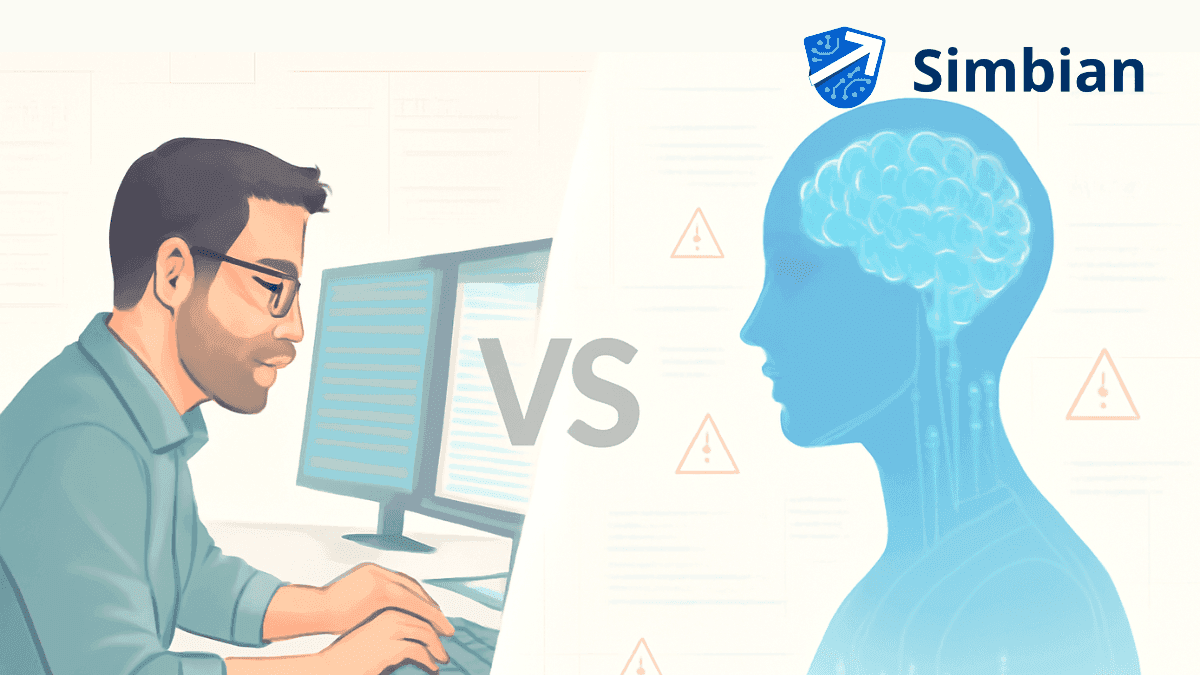
Picture a SOC analyst opening the queue at 7 a.m. and finding 1,500 alerts waiting. Half are false alarms. One hides a ransomware payload. The clock is already running, and the analyst hasn't finished their first coffee.
That's the working reality of most Security Operations Center teams today. Volume outpaces attention, and attention is the thing an adversary buys with every fresh alert. An AI SOC Analyst doesn't fix that by replacing people. It fixes it by absorbing the queue work so human defenders can spend their day on the alerts that actually matter. Simbian.ai's AI SOC platform is built around that idea: give the SOC a self-improving teammate that reads runbooks, triages alerts, and hands back the 5% that need a human call.
An AI SOC Analyst, sometimes called an "AI SOC Agent," is an automation layer that sits inside your existing SOC stack. It reads the same runbooks your Tier-1 team reads, ingests the same alerts, and executes the same triage, containment, and remediation steps. The difference is speed and consistency: it doesn't blink at alert 1,401, and it doesn't skip a step because the shift is almost over.
Key capabilities:
For SOC leaders, this isn't a headcount play. It's a way to close the cybersecurity talent gap without asking a lean team to swallow more work. The AI SOC handles the noise. Analysts spend their day on the adversary.
Most SOC teams burn their day on false positives. An AI SOC changes the shape of that work:
The result is a queue you can actually close: faster triage, fewer late-night pages, and a higher share of real threats caught before they move laterally.
The workforce shortage hits Tier-1 hardest, and Tier-1 is exactly where turnover is worst. An AI SOC Analyst takes pressure off both ends of the pipeline:
Traditional SOCs react. An AI-augmented SOC looks ahead:
Step 1: Integrate incrementally. Start with low-risk queues (spam, informational alerts) before handing over anything sensitive. Simbian.ai's phased onboarding keeps the blast radius small while confidence builds.
Step 2: Audit AI decisions weekly. Review 10–20% of closed alerts, then tune risk scores and escalation thresholds. Feed the decisions back through Context Lake™ so the model learns your environment's shape, not a generic one.
Step 3: Measure ROI in numbers the CFO reads. Track:
Gartner predicts 75% of SOCs will run AI analysts by 2026. The teams that win won't be the ones that replaced their staff. They'll be the ones that gave their staff a self-improving teammate through tools like the AI SOC Agent and moved humans up the value chain.
Tomorrow's SOC roles look different:
It's worth stating the autonomy claim plainly: the AI SOC is self-improving, not self-driving. Every decision it makes is auditable, every override teaches it something, and every escalation still lands on a human desk.
An AI SOC Analyst isn't a luxury anymore. Adversaries are already using AI to compress attack timelines, and a queue-bound Tier-1 team can't keep up on will alone. With Simbian.ai, teams report cutting alert noise by roughly 83%, accelerating response times, and moving analysts from ticket clearing to real threat work. The question isn't whether you adopt AI in the SOC. It's how fast you can get the first queue handed over.
Explore Simbian.ai's AI SOC solutions to future-proof your defenses.