Loading...

Loading...
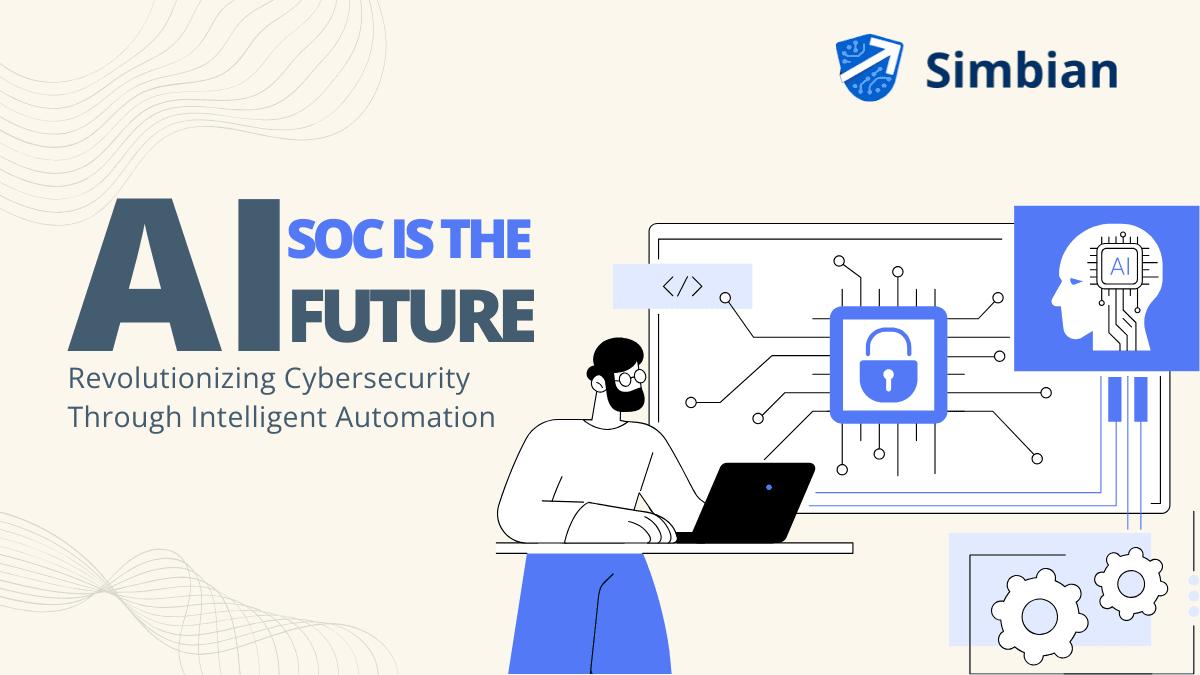
he cybersecurity landscape is at a critical inflection point. With cyber-attacks occurring every 39 seconds and global weekly attacks increasing by 30% in Q2 2024, traditional security operations centers are struggling to keep pace with the volume, velocity, and sophistication of modern threats.
A Security Operations Center (SOC) powered by artificial intelligence (AI) leverages machine learning, generative AI, and hyperautomation to enhance threat detection, response, and mitigation. Unlike conventional SOCs that rely heavily on manual processes and human analysts to sift through thousands of daily alerts, AI SOCs harnesses intelligent algorithms to automate routine tasks, reduce false positives, and enable security teams to focus on strategic threat hunting and complex incident analysis.
At its essence, an AI SOC changes the paradigm of "detect and respond" to a “detect and disrupt” mindset, providing organizations with a new way to think about cybersecurity defense.
Statistics illustrate that there is a human capital crisis in the security operations center. A survey showed that 71% of security professionals would leave their jobs because of information overload, lack of time-off, and alerts fatigue. While 78% of SOC personnel are working overtime, and are logging an average of seven additional hours per week, the human cost of traditional security operations is not scalable.
Even more concerning, over 80% of businesses are open about having less than five security analysts (or having far less than what is necessary for an effective SOC). When you consider that security teams (66%) receive an average of over 11,000 alerts per day combined with a skills gap, it seems to be a perfect storm for operational inefficiency and cyber risk.
The economic impact is staggering. By 2025, cybercrime costs will top $10.5 Trillion annually, and the average cost of a data breach in 2024 will be $4.88 million, which will be a 10% increase from 2023. The data tells us that the security operations challenge is urgently highlighted, but it also makes the case for a more intelligent and scalable security operation.
AI SOC addresses these challenges through several key technological capabilities that fundamentally transform security operations:
Automated Threat Detection and Analysis : AI-based systems can scan and interpret all security data in real-time to detect patterns and anomalies that a human analyst may fail to analyse. By taking advantage of behavioral analytics and machine learning-based algorithms, AI SOCs can identify advanced threats, like zero-day exploits and insider threats, with amazing precision.
Intelligent Alert Triage and Prioritization : Perhaps more than anything else, AI SOCs can automatically classify alerts, prioritize the highest-risk threats, and enrich incident details with the right context. They eliminate the frightfully high-false positive threats and allow the analyst to focus on real security threats, rather than just focusing on uninteresting alerts.
Accelerated Incident Response: AI SOCs can reduce mean time to detection (MTTD) and mean time to response through automated investigation and containment processes. Instead of manually correlating security data, AI-driven playbooks can take immediate action based on predefined response protocols, significantly reducing the window of opportunity for attackers.
The future of AI SOCs is with multi-agent systems – complex architectures, where many specialized AI agents work together in an increasingly complex world of cyber security to provide complete coverage. They take AI and distribute the tasks between agents that are specialized in areas such as intrusion detection, anomaly detection and threat intelligence sharing.
Multi-agent systems in cybersecurity offer several compelling advantages: they provide scalability by allowing agents to be added or removed dynamically, adaptability through continuous learning from new data, fault tolerance where other agents continue operating if one fails, and enhanced collaboration through shared insights and coordinated responses.
The implementation of agentic AI in cybersecurity represents a paradigm shift toward autonomous operation, where AI agents can coordinate actions like validating anomalies, cross-checking threat intelligence, isolating hosts, and recommending fixes with minimal human intervention.
The transformation to AI SOCs delivers tangible benefits across multiple dimensions of security operations:
Operational Efficiency: AI automation enables SOC teams to handle larger alert volumes and optimize resource allocation without significantly increasing headcount. Research shows that 75% of cybersecurity professionals now recognize automation's importance, with alert triage automation increasing from 18% to 30% in just one year.
Enhanced Threat Detection: AI-driven analytics improve threat detection accuracy by 58% while reducing false positive security alerts by 43%. This enhanced precision allows security teams to focus on genuine threats rather than chasing false alarms.
Accelerated Response Times: AI SOCs significantly reduce incident response times by automating investigation and containment processes. This speed is critical in an environment where every second counts in preventing or mitigating cyberattacks.
Scalable Defense: Unlike traditional SOCs constrained by human resources, AI SOCs can scale their operations dynamically to match organizational needs and evolving threat landscapes.
The ultimate evolution of AI SOCs is the autonomous Security Operations Center – a next-generation cybersecurity framework that automates routine detection, investigation, and response workflows with minimal human intervention. While fully autonomous SOCs remain aspirational, the technology is rapidly advancing toward this goal.
According to industry analysis, autonomous SOCs integrate advanced technologies like machine learning, Security Orchestration, Automation, and Response (SOAR), Extended Detection and Response (XDR), and behavioral analytics to deliver 24/7 threat detection and intelligent triage. These systems function as relentless digital co-pilots, scaling human capabilities while ensuring resilience against increasingly sophisticated cyber threats.
The shift toward AI-enabled security operations involves more than just an exchange of hardware and software - it is a significant strategic shift to organizations with genuine intentions of enhancing their cyber resilience planning. Growing sophistication of attacks, coupled with a severe shortage of cyber security talent, makes AI SOCs a legitimate option that combines human action and machine knowledge to create timely, optimal, and ongoing security operations.
The future will belong to those organizations that understand AI SOC as a resource not only for threat detection however as an all-inclusive approach to comprehensive transformation of their security posture. Legitimizing this technology today is setting up the capabilities necessary for cyber defensive efforts tomorrow. That's one step ahead of threat improvement that is clearly evolving.
The question isn't whether AI SOCs will become the standard – it's how quickly organizations will adapt to this new reality and harness the power of artificial intelligence to secure their digital future.