Loading...

Loading...
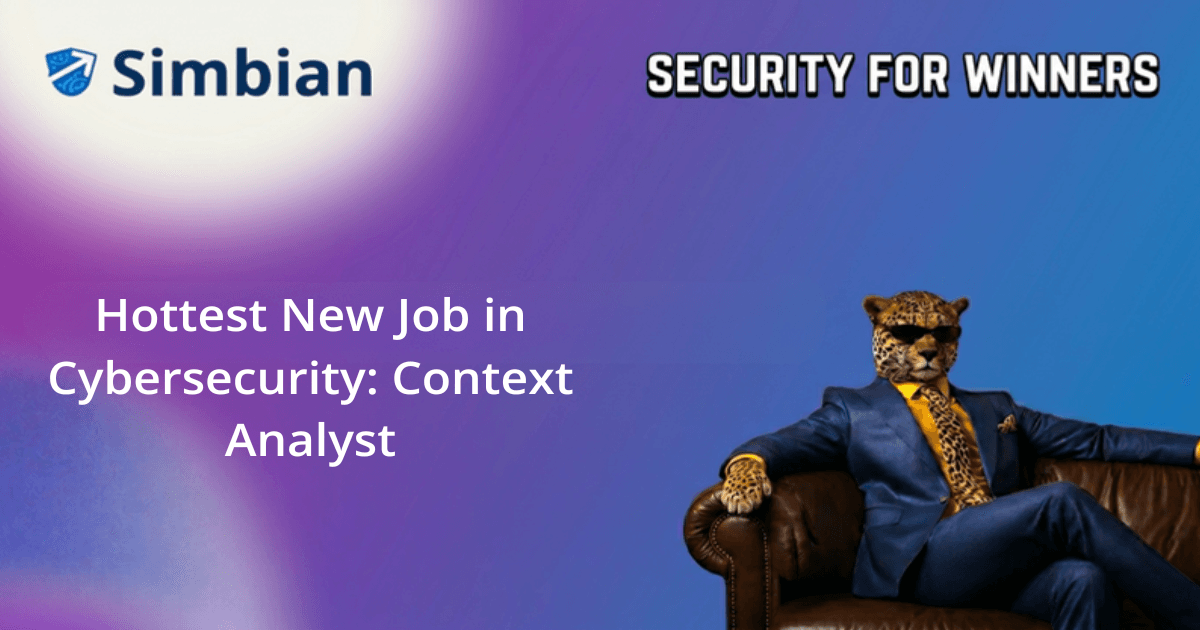
Reasoning across specific context is a key distinction between AI SOC and both rules-based legacy SOAR solutions and generic LLM copilots. Good context must be managed and nurtured, creating a critical new role of Context Analyst.
The greatest vulnerability in the modern SOC is not a lack of data – it is a lack of memory.
Today, most security operations are "stateless." An analyst investigates an alert, determines it is a false positive caused by a specific backup process, and closes the ticket. Three months later, a different analyst sees the same alert, lacks the context of the previous investigation, and repeats the same manual work.
We are playing a game of "Alert Whack-a-Mole." Every day is Day 1. Every alert is new.
The most valuable asset in your SOC is not your SIEM or your EDR – it is the Tribal Knowledge locked in the heads of your senior analysts. It is the unwritten context: "That server always spikes on Tuesdays," "The CEO is traveling to Japan this week," or "That confusing PowerShell script is actually part of our deployment pipeline."
The problem? This knowledge walks out the door at 5:00 PM. It is lost to turnover, burnout, and shift changes. To succeed with AI, we must move from a Stateless model to a Stateful one. We must capture this tribal knowledge and turn it into code.
The industry has spent the last decade solving the "Data Access" problem with approaches like the Security Data Mesh. We have centralized petabytes of logs. But access is not understanding. Accessing a billion logs doesn't stop a breach, but understanding the relationships between them does.
This requires a new architectural concept: the Context Lake. Unlike a traditional data lake that stores static logs (what happened), a Context Lake stores meaning (why it matters). It acts as the organization's "Long-Term Memory." It uses a Semantic Knowledge Graph to map the relationships that exist in the real world but are missing from the raw logs:
"Accessing a billion logs doesn't stop a breach, but understanding the relationships between them does."
Most AI tools today are "Read-Only." They read your logs and offer a summary. This is passive.
To truly harness tribal knowledge, we need a Read/Write Feedback Loop.
In this model, the AI Agents don't just consume data; they also write new context back into the system. When a senior analyst concludes an investigation, the AI should close the ticket and should "learn" the lesson.
This transforms ephemeral ticket resolutions into persistent institutional memory. The SOC stops solving the same problems twice.
This shift creates a new, elevated role for the human responder. We are moving away from the "Tier 1 Grinder" who manually processes alerts, toward the Context Analyst.
The Context Analyst not only works in the system, they also work on the system. Their job is not to play "whack-a-mole," but to be a Gardener of the Graph.
This is how we scale. A human can only investigate 10 alerts a day. A human teaching an AI can resolve 10,000 alerts a day.
Finally, a system built on tribal knowledge must have an "Immune System." Humans make mistakes, and data becomes stale. The Context Lake must include an active manager, an AI "Operating System", that enforces hygiene.
When you build a SOC around tribal knowledge, you achieve Compounded Intelligence. In a traditional SOC, you are only as good as the analysts on shift right now. In an AI-driven, stateful SOC, every investigation ever conducted, every lesson learned, and every piece of context gathered is permanently available to defend the enterprise. You stop renting your security intelligence, and you start building equity in it.
Read the full ebook → Security for Winners: The Art of Using AI to Secure Your Company and Get Yourself Promoted