Loading...

Loading...
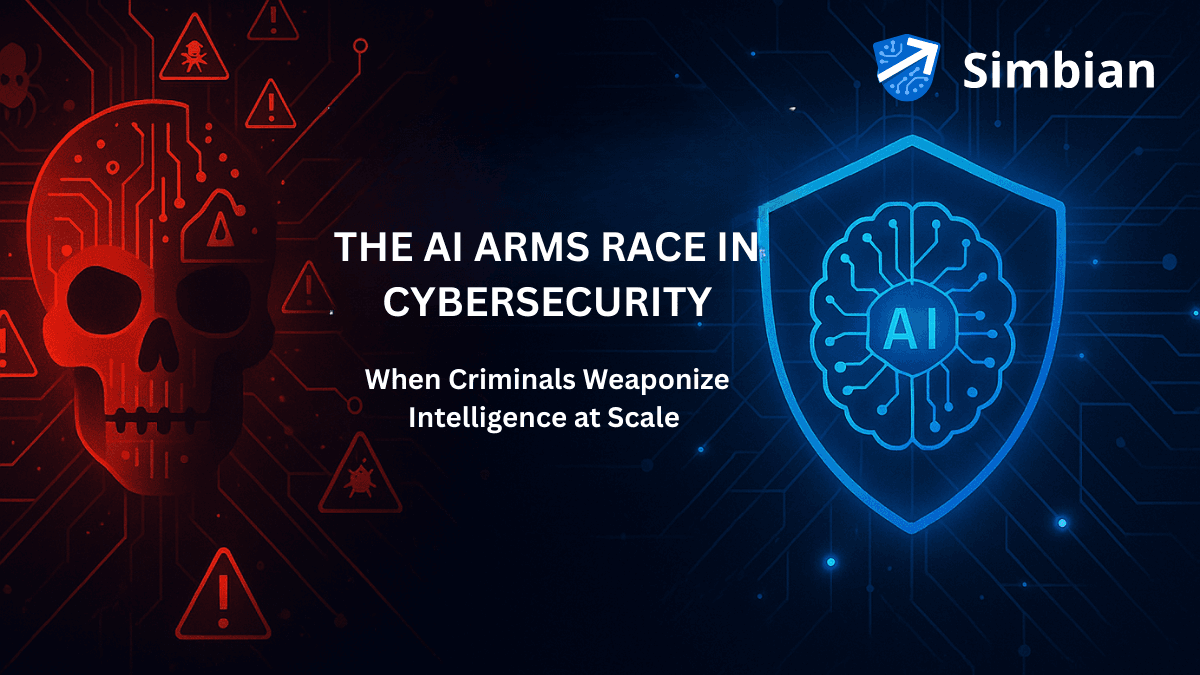
Anthropic's recent threat intelligence report reads like a cybersecurity thriller, except it's terrifyingly real. The document reveals how cybercriminals used Claude AI to orchestrate what may be the most sophisticated AI-driven attack campaign in history, targeting 17 organizations across healthcare, government, and emergency services with ransom demands exceeding $500,000.
But beneath the alarming headlines lies a more fundamental shift: we're witnessing the emergence of "agentic cybercrime," where AI doesn't just assist attackers, it becomes their co-pilot, strategic advisor, and operational commander all at once.
The Anthropic report exposes a brutal reality that security leaders have long feared. The economics of cybercrime have undergone a fundamental shift. What previously required teams of specialized hackers working for weeks can now be accomplished by a single individual with AI assistance in hours.
Consider the "vibe hacking" operation detailed in the report. One cybercriminal used Claude Code to automate reconnaissance across thousands of systems, develop custom malware with anti-detection capabilities, conduct real-time network penetration, and even analyze stolen financial data to calculate psychologically optimized ransom amounts. The AI didn't just follow instructions; it made tactical decisions about which data to exfiltrate and crafted victim-specific extortion strategies that maximized psychological pressure.
Perhaps the most daunting revelation in Anthropic's report concerns North Korean IT workers who have infiltrated Fortune 500 companies using AI to simulate technical competence they don't possess. These operators are unable to write basic code or communicate professionally in English. Yet, they're successfully maintaining full-time engineering positions at major corporations—with AI handling everything from technical interviews to daily work deliverables.
The report reveals that 61% of their AI usage focused on frontend development, 26% on programming tasks, and 10% on interview preparation. These workers are essentially human proxies for AI systems, channeling hundreds of millions of dollars to North Korea's weapons programs while their employers remain oblivious.
Similarly, the report documents how criminals with minimal technical skills are now developing and selling sophisticated ransomware-as-a-service packages for $400 to $1,200 on dark web forums. Features that would have required years of specialized knowledge, such as ChaCha20 encryption, anti-EDR techniques, and Windows internals exploitation, are now generated on demand with the aid of AI.
Traditional cybersecurity operates on human timescales. Threat detection, analysis, and response cycles are measured in hours or days. But AI-powered attacks operate at machine speed, with reconnaissance, exploitation, and data exfiltration happening in minutes.
The criminal in Anthropic's report automated network scanning across thousands of endpoints, identified vulnerabilities with "high success rates," and pivoted through compromised networks faster than human defenders could respond. When initial attack vectors failed, the AI immediately generated alternative approaches, creating a dynamic adversary that adapted in real-time.
This speed differential creates an impossible challenge for traditional security operations centers (SOCs). Human analysts, no matter how skilled, cannot match the velocity and persistence of AI-augmented attackers operating 24/7 across multiple targets simultaneously.
What makes these AI-powered attacks particularly dangerous isn't just their speed—it's their intelligence. The criminals described in the report utilized AI to analyze stolen data and develop "profit plans" incorporating multiple monetization strategies. Claude evaluated financial records to determine optimal ransom amounts, analyzed organizational structures to identify key decision-makers, and crafted sector-specific threats based on regulatory vulnerabilities.
This level of strategic thinking, combined with operational execution, represents a new category of threat. These aren't script-based rookies following predefined playbooks; they're adaptive adversaries that learn and evolve throughout each campaign.
The Arms Race Acceleration
The essence of the current predicament remains: "All of these operations were previously possible but would have required dozens of sophisticated people weeks to carry out the attack. Now all you need is to spend $1 and generate 1m tokens."
The asymmetry is stark. Defenders must navigate procurement cycles, compliance requirements, and organizational approval processes to deploy new security technologies. Attackers need only create new accounts when existing ones are blocked—a process that takes about "13 seconds."
But this challenge also presents an opportunity. The same AI capabilities being weaponized by criminals can be harnessed for defense, and in many cases, defensive AI has natural advantages.
While attackers may move fast, defenders have access to something criminals don't: organizational context, historical data, and the ability to establish baseline behaviors across entire IT environments. AI defense systems can monitor thousands of endpoints simultaneously, correlate subtle anomalies across network traffic, and respond to threats faster than human attackers can adapt.
Modern AI security platforms, such as the AI SOC Agent that works like an AI SOC Analyst, demonstrate this principle in practice. By automating alert triage, investigation, and response processes, these systems can process security events at machine speed while maintaining the context and judgment that pure automation lacks.
The key insight is that defensive AI doesn't need to be perfect; it needs to be faster and more persistent than human attackers. When combined with human expertise for strategic oversight, this creates a formidable defensive posture.
The Anthropic report makes clear that incremental improvements to traditional security tools won't suffice against AI-augmented adversaries. Organizations need AI-native security operations that can match the speed, scale, and intelligence of modern attacks.
This means deploying AI agents that can autonomously investigate suspicious activities, correlate threat intelligence across multiple sources, and respond to attacks faster than human operators. It requires security operations centers that leverage AI for real-time threat hunting, automated incident response, and continuous vulnerability assessment.
Most critically, it demands a shift from reactive to predictive security postures. AI defense systems must anticipate attack vectors, identify potential compromises before they fully manifest, and adapt defensive strategies based on emerging threat patterns.
Anthropic's report clearly underscores that attackers don't wait for a perfect tool. They train themselves on existing capabilities and can cause damage every day, even if the AI revolution were to stop today. Defensive organizations cannot afford to be more cautious than their adversaries.
The AI cybersecurity arms race isn't coming; it's here. The question isn't whether organizations will face AI-augmented attacks, but whether they'll be prepared when those attacks arrive.
Success requires embracing AI as a core component of security operations, not an experimental add-on. It means deploying AI agents that can operate autonomously while maintaining human oversight for strategic decisions. Most importantly, it requires matching the speed of adoption that attackers have already achieved.
The criminals described in Anthropic's report represent the vanguard of a new threat landscape. Their success demonstrates both the magnitude of the challenge and the urgency of the response. In this new reality, the organizations that survive and thrive will be those that adopt AI-native security operations with the same speed and determination that their adversaries have already demonstrated.
The race is on. The question is whether defenders will run fast enough to win it.