

TL;DR
🚀 Carahsoft Partnership: Simbian is now available to federal agencies, DoD, and SLED through Carahsoft's contract vehicles.
🔬 CDB On Demand: Frontier LLMs hallucinate pristine investigations of IPs that never existed — see the harness that fixes it.
📅 ETCISO Decrypt 2026: Gruve × Simbian at Mumbai — India is ready for Self-Improving Defense.
💡 LLM Router: Why single-model AI is a 2026 concentration risk and a new CISO control plane.
📊 Gartner Hype Cycle: AI SOC Agents jumped to the Peak; Gartner warns about AI washing four times.
🛡️ Self-Improving Defense: Coverage compounds instead of decays — 33% to 83% MITRE in three cycles.
🧪 LRQA Webinar: Join LRQA and Simbian on 15 July for AI-driven pentesting, NIS2, and DORA.
📰 Industry Buzz: Five June stories shaping cybersecurity — patches, breaches, supply chain.
Simbian × Carahsoft: Self-Improving Defense Comes to Government
Simbian is now available through Carahsoft, the trusted government IT solutions provider — bringing Self-Improving Defense to federal civilian agencies, DoD, and SLED teams through Carahsoft's contract vehicles and reseller network.
Federal SOCs face the same alert tide as enterprise, but with tighter hiring constraints and longer accreditation timelines. The AI SOC Agent autonomously triages, investigates, and responds to every alert in under 4 minutes on average, with 95% of those responses approved by your own analysts — no playbooks to write, no headcount to add. With Carahsoft's procurement reach, government teams can deploy production-ready autonomous SecOps through the contracts they already use.

On Demand — Why LLMs Fail in the SOC (and How to Make Them Work)
Imagine your AI SOC is doing great — except it can't catch data exfiltration. As Ambuj puts it on the session: "Other than that, how was the play, Mrs. Lincoln?"
Frontier LLMs write pristine, well-formatted investigations of IP addresses that never existed. Feed the same alert to the same model three times and you'll get critical, benign, and ignored — you can't run a SOC on a coin flip. The on-demand session uses the Cyber Defense Benchmark to ground the failure modes, then walks through the harness pattern that turns raw LLMs into something you'd actually trust on defense.
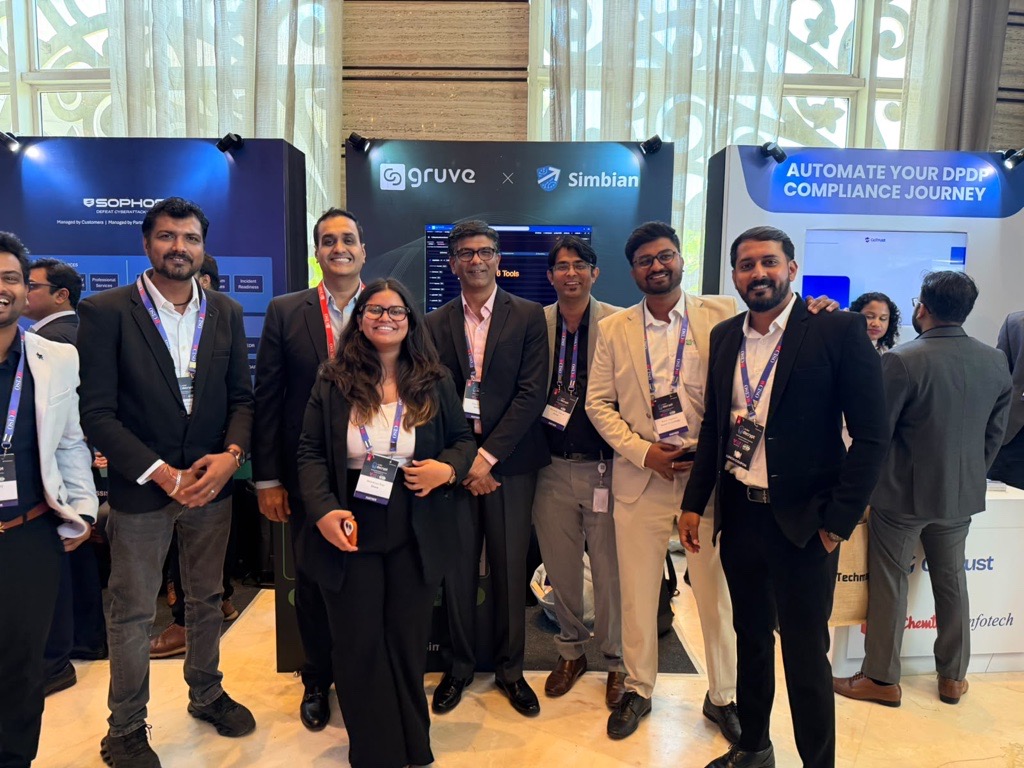
Gruve × Simbian at ETCISO Decrypt 2026
The Gruve × Simbian team set up at ETCISO Decrypt 2026 at Taj Santacruz, Mumbai — Booth #16, fielding conversations with some of India's sharpest CISOs on autonomous SOC and AI-native security. The energy was real, and every conversation circled back to the same question: how do you move from alert-chasing to autonomous defense without losing control?
Thanks to everyone who stopped by. The Gruve × Simbian partnership is just getting started, and India is clearly ready for Self-Improving Defense.
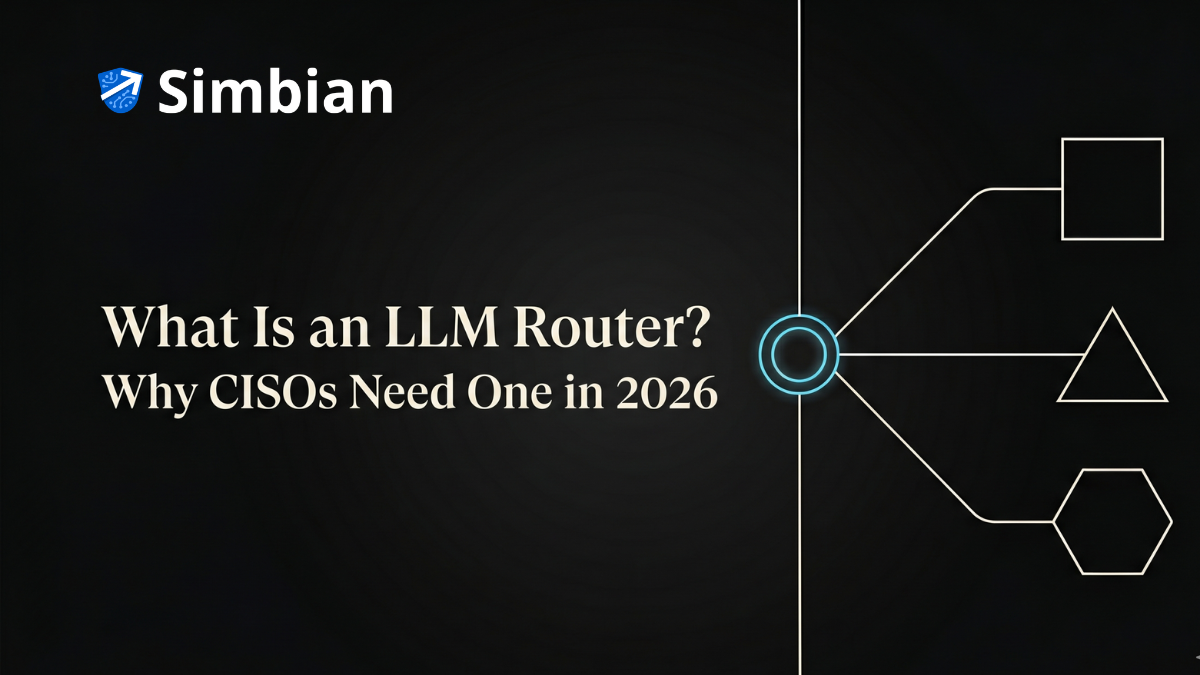
The LLM Router Is a CISO Control
A year ago the AI architecture conversation was about picking the best frontier model. This June, it's about not depending on any of them. Anthropic logged ten outages in twelve days. Its Mythos model was pulled on national-security grounds with no deprecation runway. One enterprise customer ran up a $500M single-month Claude bill because no one had set a per-employee cap.
The LLM router is no longer a developer shortcut. Under DORA Article 28, it's a CISO concentration-risk control. The blog walks through what an LLM router is, the three moving parts of a routing decision, and why single-model AI is now a board-level architecture call.
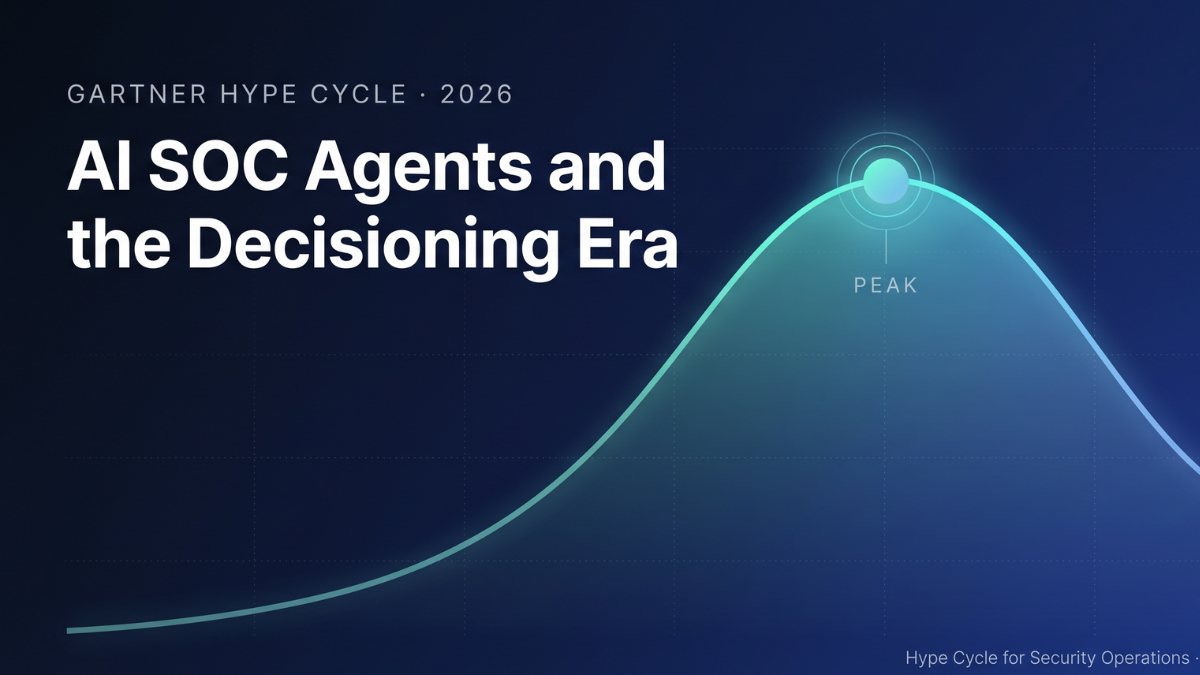
Gartner Hype Cycle 2026: AI SOC Agents at the Peak
Gartner moved AI SOC Agents from Innovation Trigger to the Peak of Inflated Expectations in a single year — the fastest move on the 2026 Hype Cycle for Security Operations. In the same report, Gartner uses the phrase "AI washing" four times and tells buyers to demand independent benchmarks before paying a premium.
Three structural shifts are pulling the category toward decision-grade automation, and Simbian is one of ten vendors Gartner names in the AI SOC Agents profile. The blog breaks down what changed in twelve months, the AI-washing warnings buried in the analyst commentary, and the five questions every buyer should ask before signing.
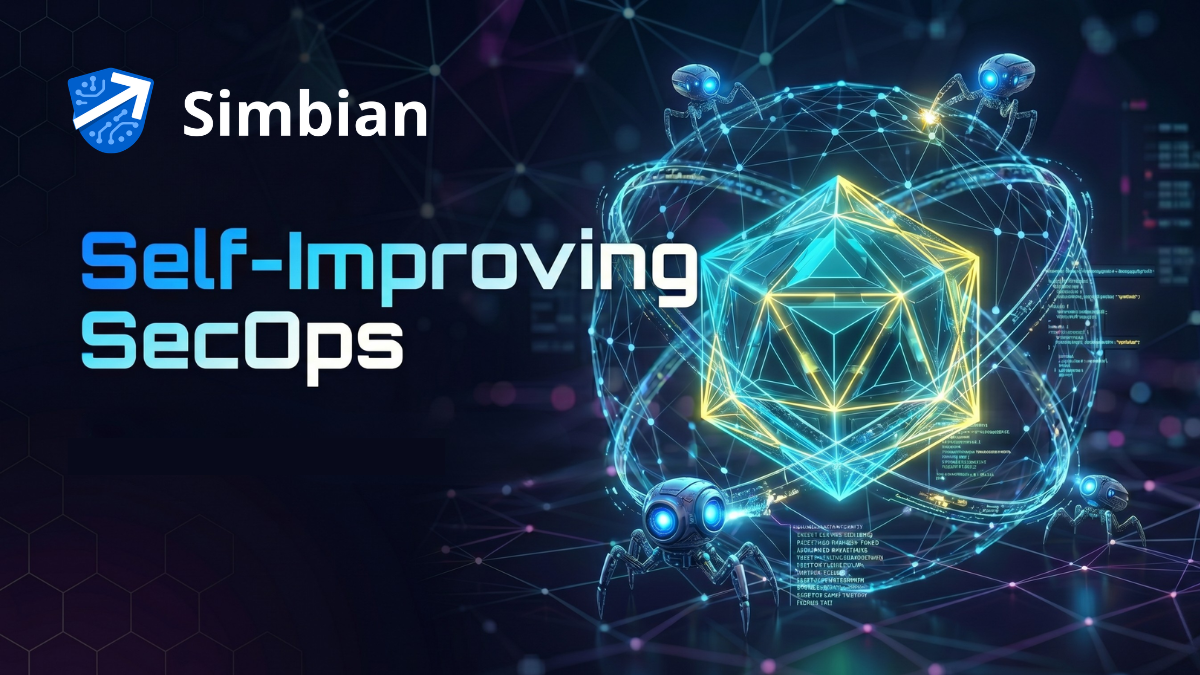
Self-Improving Defense — Defense That Compounds
Every category of AI security tooling shares the same hidden flaw: coverage decays. Self-Improving Defense inverts that — defense compounds. The offensive AI agents that find the gaps and the defensive agents that close them share one memory, score against the same MITRE ATT&CK map, and get sharper with every cycle.
In one real deployment, MITRE coverage moved from 33% to 83% in three cycles. Simbian is the only platform built end-to-end around this loop — trusted by 175+ enterprises, six of the Fortune 500, and the world's largest MSSPs. See the loop, the five properties of a self-improving platform, and what to demand from any vendor claiming the category.
See Self-Improving Defense here.
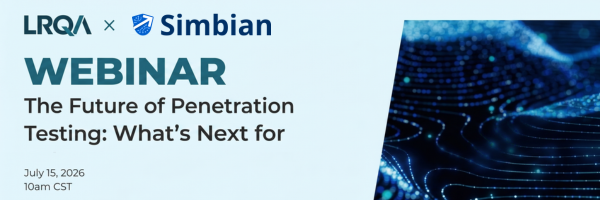
Webinar — LRQA × Simbian: The Future of Penetration Testing
Penetration testing is changing fast. AI-driven attackers move faster than annual assessments can keep up with, and NIS2 and DORA are now putting continuous validation on every compliance roadmap. Join LRQA and Simbian on 15 July for a working session on what modern penetration testing looks like when AI is on both sides of the table — and how to build the cyber resilience regulators are now asking for.

Product Spotlight: Supply Chain Scanning × AI Pentest Agent
Most AppSec teams burn cycles chasing CVE noise. We changed the math: Supply Chain Scanning reviews your codebase and its dependencies to surface every CVE in your environment. The AI Pentest Agent then builds and runs targeted exploits against those CVEs against your production deployment. Each CVE gets a verdict — confirmed exploitable, present but not exploitable, or not present — with the full evidence trail, including reproduction steps a developer can follow. Once a fix ships, the same vulnerability is retested automatically to validate and document remediation.
Net result: AppDev teams stop guessing which vulnerabilities matter and only spend cycles on the ones that actually do.
1. Microsoft ships biggest-ever Patch Tuesday — 206 fixes, three zero-days (incl. HTTP/2 "Bomb" CVE-2026-49160)
The HTTP.sys flaw lets unauthenticated attackers exhaust memory on internet-facing IIS via crafted HTTP/2 headers. Microsoft also shipped a new MaxHeadersCount registry setting to cap header counts on HTTP/2 and HTTP/3.
2. Cisco Catalyst SD-WAN zero-day (CVE-2026-20245) exploited months before disclosure
Mandiant traced active exploitation back at least two months pre-disclosure. Attackers used a malicious CSV upload to escalate a compromised admin account to root on vManage.
3. Aflac confirms June breach — 22.6M people, Scattered Spider–linked
Social-engineered access to multiple user accounts pulled SSNs, government-issued IDs, and health data. Part of a wider Scattered Spider campaign hitting Philadelphia Insurance, Erie Insurance, and Scania Financial.
4. Shai-Hulud worm hits Red Hat npm packages (~80K weekly downloads)
A compromised Red Hat employee GitHub account pushed a self-replicating "Miasma" payload across 32 @redhat-cloud-services packages, bypassing code review. New variants have since spread further across the npm ecosystem.
5. The worst hacks and breaches of 2026 so far
TechCrunch's mid-year roundup pulls Aflac, Allianz, Coinbase, and the M&S retail wave into one read — useful framing for board-level conversations on insurance-sector risk concentration.


Simbian AI, 809 Cuesta Dr Suite B # 104, Mountain View, CA, 94040, United states, +1 650-695-0740
